

Where Things Stand: The Congressional Landscape
Despite a partial government shutdown—the Department of Homeland Security has been shuttered for over 40 days with TSA workers only recently seeing payment, airport delays worsening, and a new Secretary to be installed—appropriators and congressional offices are continuing to prepare for the FY2027 funding cycle.
Congress now heads into a two-week recess with both chambers out of session and lawmakers back in their home states and districts until the third week of April.
Congressional Committees Examining Healthcare
Committee work continued apace in March with the House Energy and Commerce Committee holding the third hearing in their series on Lowering Health Costs for All Americans, this one focused on providers. Further oversight work continued in the healthcare space, with several committees holding hearings—including the Oversight & Investigations Subcommittee that held a hearing featuring testimony from Centers for Medicare & Medicaid Services (CMS) Deputy Administrator and Chief Operating Officer Kimberly Brandt on the role of CMS on combatting fraud in Medicare and Medicaid.
In the upper chamber, the Senate Finance Committee remains relatively quiet on the healthcare front, but the Senate Health, Education, Labor, and Pensions (HELP) Committee held a “Member Day” hearing on March 19, providing Senators the opportunity to highlight priorities. Workforce-related proposals included legislation on provider pathways (S.942, S.1380), rural maternal health (S.380), the nursing workforce (S.1482, S.547), and the reauthorization of HRSA Title VIII programs.
Emerging Healthcare Legislation at a Glance
On March 4, Sens. Curtis (R-UT) and King (I-ME) introduced the bipartisan Community TEAMS Act (S.3989), which would expand clinical training opportunities through partnerships with community-based providers—including federally qualified health centers—to improve recruitment and retention in underserved areas.
On March 17, Reps. Salazar (FL-27), Lawler (NY-17), Clarke (NY-09), and Bishop (GA-02) introduced the bipartisan H1Bs for Physicians and the Healthcare Workforce Act (H.R.7961), which would exempt healthcare professionals from proposed increases to H-1B petition fees and prevent additional costs beyond those already established in federal law.
On March 30, Sens. Wyden (D-OR) and Blackburn (R-TN) introduced the bipartisan Health Workforce Innovation Act (S.4254) to address health workforce shortages by creating a federal grant program that supports community-based partnerships, particularly in rural and underserved areas, to train and build pathways for health professionals.
How We’re Responding: ACU Advocacy
As new legislation begins to takes shape, ACU has continued our ongoing advocacy for the National Health Service Corps (NHSC) and broader healthcare workforce to ensure enhanced funding in FY2027 appropriations and beyond. A few of our recent initiatives include:
Congressional Outreach: ACU continues to engage with Rep. Maxine Dexter (D-OR-03) and Sen. Dick Durbin (D-IL) on reauthorization of funding for the National Health Service Corps (NHSC) and the need for long-term, stable workforce investment. Outreach to a variety of additional offices indicates a growing interest in the effort, and ACU is continuing to identify bipartisan champions to support potential legislation.
Appropriations: Simultaneously, ACU is advancing our early advocacy for NHSC funding in early FY2027 appropriations, including tracking congressional sign-on (“Dear Colleague”) letters supporting NHSC funding. Stay tuned for more information and potential calls to action to support these letters!
Partnering in the Alliance to Strengthen America’s Health Workforce for the Underserved: ACU continues to serve on the Executive Committee of the Alliance to Strengthen America’s Health Workforce for the Underserved, collaborating with partners on legislative strategy, upcoming funding reauthorizations (including Title VII and Title VIII), and planning for an upcoming meeting to align shared priorities and advocacy efforts.
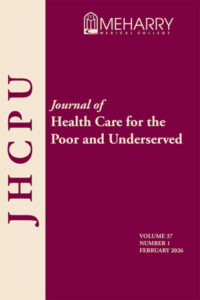 Spotlighting the NHSC and Healthcare Workforce in Publications and Resources: In the May edition of the Journal of Health Care for the Poor and Underserved (JHCPU), ACU will outline workforce shortages, their disproportionate impact on underserved communities, and the critical role of programs such as NHSC and community health centers in addressing these challenges in a new column. This examination of the healthcare workforce landscape will complement our earlier strategic recommendations to enhance the NHSC in the February issue of JHCPU, “A Roadmap for the Health Workforce Revisited: New Recommendations to Ensure the Continuing Impact of the National Health Service Corps.” To further inform our network’s advocacy, ACU is developing one-pagers on the value, purpose, and impact of the NHSC to support engagement with Congress and the Administration.
In Case You Missed It: Engaging with New Workforce-Related Federal Regulations and Developments: Earlier this month, ACU finalized and submitted comment letters on three key federal proposals and developments:
- Responding to the Department of Education’s Proposed Rule on Student Loans: ACU submitted a comment letter on March 2 raising concerns about the impact of loan caps, the potential phasing out of Graduate PLUS loans, and changes to professional degree designations on health workforce pathways.
- Responding to HRSA’s Request for Public Comment on Updated Maternity Care Target Area (MCTA) Criteria: ACU submitted comments on March 5 sharing feedback about proposed changes to workforce shortage designation methodology and the potential implications for NHSC placement and maternal health access.
- Upholding the Professionalism of Nursing: ACU signed onto the March 2 Nursing and Friends comment letter urging the Department of Education to preserve recognition of nursing and other advanced clinical training programs under the “professional degree” designation, warning that narrowing the definition could restrict access to federal loan support and harm workforce pathways serving underserved communities.
How You Can Help: Stay Tuned and Watch for Future Calls to Action
Now, as ever, your voice matters! Thanks to your collective advocacy, we helped preserve funding for the NHSC and other vital health extender programs in FY2026 funding. As our eyes turn to future legislation, ACU will continue to rely on your input and perspectives to fuel our advocacy. If you haven’t yet, please become an ACU Advocate to stay up to date on new developments and calls to action.
If you have any questions or need assistance with your own advocacy, please contact us.
